

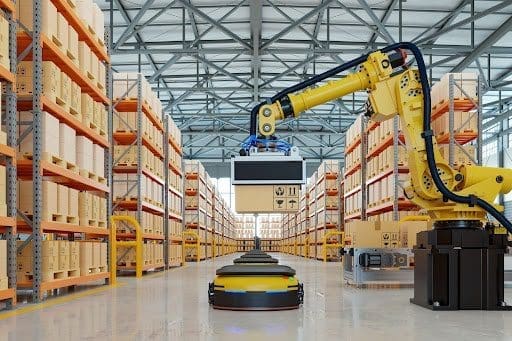

The proliferation of machine learning and other automated processes has led to the rise of robotics-centred industries worldwide, particularly in developed nations. Singapore relies heavily on robots since it has been at the forefront of robotics applications and artificial intelligence research.
Singapore has invested in this technology as its government has integrated robots into its society and economy. For this reason, Singapore robotics has become the epitome of how countries can take advantage of this technological wonder and achieve socio-economic development.
But what are the benefits of robotics to Singapore’s economy? What are the projections for the robotics industry in the country? Let us find out how Singapore has invested deeply in robotics and its plans concerning this cutting-edge technology.
Robots as a Solution to Socio-Economic Concerns
It is essential to understand why this island nation turned into robotics in the first place. While this technological solution is part of the Smart Nation Initiative, using robot labourers has helped improve Singapore’s socio-economic sector. More importantly, this strategy was a likely response to some of the socio-economic issues in the country, which are:
Population Issues
Regarded as one of the fastest growing economies in the world, Singapore was also experiencing a looming problem with its population. Its ageing population was at its highest at 13.7% in 2018. According to projections, the figure would rise to 23.8% in 2030.
Meanwhile, the number of working-age people (from 20 to 64 years old) had a significant drop from 65% in 2011 to 61.9% in 2021. By 2030, it would plummet to 56%. The declining birth rates have also compounded these dilemmas as the figures hit from 1.2 in 2016 to 1.1 in 2021.
Workforce Shortage
Considering the population issues Singapore currently faces, the country is also having problems renewing its gradually dwindling workforce. This global talent shortage, which has also affected other developed Asian countries, particularly Japan and Taiwan, has plagued the country even in the early 1990s.
These ongoing issues on Singapore’s labour gap have also compounded this concern as millennials prefer leadership roles over jobs in the service sector. For this reason, the country has had difficulty filling manufacturing, sales, marketing, and administrative positions.
Robotics in Singapore
Because of the population and workforce trends that Singapore currently faces, the country decided to turn to robots and other automation processes as a means of allaying these crises. Singapore has increased its robot density per 10,000 labourers at a massive rate of 27% since 2015.
Because of this, Singapore is expected to become one of the top suppliers of robotics technology in the world, particularly in Asia. The country has also invested heavily in researching and financing future projects related to the industry. At the same time, Singapore may also become the largest purchaser of robotic equipment with an allotted budget of $65 billion in 2025.
Benefits of Using Robots
Despite realising its Smart Nation programme, Singapore’s drive to resolve its socio-economic woes resulted in numerous benefits. Organisations that deal with the different sectors in the country, such as manufacturing, healthcare, and occupational safety, among others, benefitted the most from robotics. Some of these benefits are:
Improved Efficiency and Productivity
Incorporating robotics in the manufacturing sector resulted in a significant increase in productivity, particularly in companies that deal with precision engineering and other similar specialities. Productivity is projected to increase by 300% once organisations use autonomous guided vehicle systems and collaborative robots or cobots.
Apart from that, robots can save working man-hours on a yearly basis because they can complete tasks consistently and perform at a longer rate. These qualities make robots the ideal labourers to fill jobs that require repetitive tasks and routines, streamlining the entire procedure in the process.
Enhanced Safety and Quality
Robots have proven their value, especially in hazardous jobs, like firefighting and defence. They are far more suitable for these types of jobs because robots can send to places where it’s too dangerous for humans.

Quality-wise, robots are also the perfect candidates because they work consistently and complete tasks with precision and accuracy. For this reason, robots open the window to a higher quality of work, which results in improved competitiveness among workers.
Creation Of New Jobs
There is a real fear that robots will displace humans at work. But automation can also create new jobs. People are needed to train, programme and maintain robots. Data scientists are required to understand the vast amounts of information machines collect. Humans are still needed to innovate, resolve situations and make executive decisions. While robots will take over many jobs, it is also estimated that robots will create up to two million jobs worldwide from 2017 to 2020.
The Future of Singapore’s Robotics Industry
Singapore continues to develop its robotics industry through value creation. This means Singapore is creating its robotics industry not just to support its numerous industries—from company startups and SMEs (small and medium enterprises) to private organisations. But the country also plans on taking its robotic industry beyond its borders through export.
With further help from its government and the National Research Foundation (NRF), Singapore continues to boost research and development and attract and foster foreign talents in the industry. This strategy could prove valuable if Singaporean manufacturers are to compete with foreign companies considered leaders in robotics solutions.
From education to the telecommunications sectors, the Singaporean government has involved every sector within the socio-economic level to help further its robotics industry. With this long-term strategy, it is only a matter of time before this Asian country truly realises its goal of a successful digital revolution, turning it into one of the world leaders in robotics and other related technological solutions.
Conclusion
With its Smart Nation initiative, Singapore has attained what most governments would have dreamed of for their respective country. A considerable percentage of the country’s workforce is composed of robots, turning Singapore into one of the countries with the highest robot density per 10,000 workers. As Singapore continues to develop its robotics industry, it plans to go beyond its borders and become a key competitor in the field of robotics.