

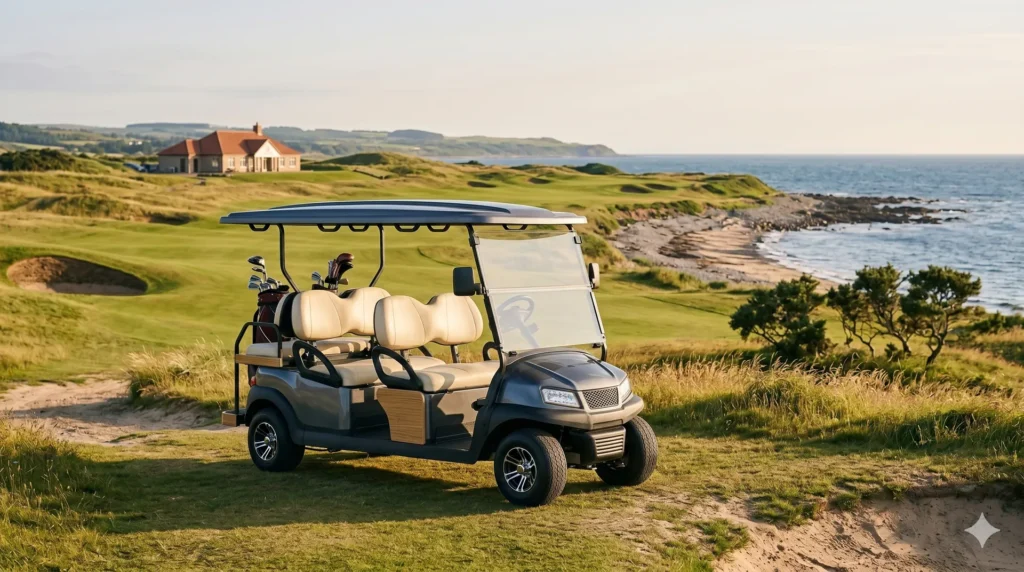
The UK golf buggy trade is a curious mix: dedicated specialists, agricultural machinery giants with a buggy corner between the tractors, importers of fluctuating seriousness, and marketplace listings of everything from pristine fleet retirements to projects wearing paint. The machine matters, but veterans of the market agree with suppliers such as Hawke Electric Vehicles on the deeper rule: you are choosing a dealer more than a vehicle.
Specialist or generalist
Agricultural dealers bring big-company solidity and casual familiarity with drivetrains, but a buggy is often their afterthought, serviced when the tractors allow. Specialists live entirely on the category: they hold the parts, know the batteries and survive on reputation within a small world. Neither tier is automatically right, but the directory of dedicated golf buggy dealers is where most buyers should start, because a dealer whose livelihood is buggies has no tractor to hide behind.
Six questions that expose a weak dealer
Walk in with these and the visit pays for itself. Who physically services what you sell, and where? What battery warranty comes in writing, in years and cycles? Are parts on your shelf or on a boat? Can I speak to a club or venue you supplied two years ago? What does commissioning include at delivery? And what happens, specifically, when a machine fails in month eighteen? Strong dealers enjoy these questions; weak ones treat them as impertinence, which is itself the answer.
Aftercare is the actual product
Any dealer can hand over a working machine on delivery day. The purchase proves itself two winters later, when a charger dies or a controller sulks, and the difference between a specialist with mobile engineers and a seller who has moved on to other stock is the difference between a lost morning and a lost month. Ask how golf buggy repairs are actually handled, at your site or theirs, before money moves, and weight the answer as heavily as the price.
Think about the exit as well as the entrance
A final differentiator: ask how the dealer handles the end of the story. Good specialists offer part-exchange on your current machine, honest valuations rather than trade-in theatre, and a route to sell back or upgrade when your needs change. A dealer who plans to know you in five years prices and behaves differently from one who plans to forget you by Friday, and the part-exchange conversation reveals which one is across the desk. It also quietly tells you what your machine will really be worth later, which is information the brochure never volunteers.
Price differences between dealers are usually small; support differences are enormous. Buy from the dealer who answers questions in writing, names their engineer and volunteers references. That dealer is rarely the cheapest on the day and almost always the cheapest by year five.